 ALERT
ALERT
Unix UX-2000 Retro Best vs Philips TAT1169BN
Advertisement
| Specification | ||
|---|---|---|
| Price | Rs.2,999.00 |
Rs.2,999.00 |
| Brand | Unix |
Philips |
| Model No | UX-2000 Retro Best |
TAT1169BN |
| Wired / Wireless | Wireless Headphone Specification |
Wireless Headphone Specification |
| Headphone Type | Neckband |
In Ear |
| Magnet Type | Dynamic |
Dynamic |
| Driver Diameter | 10 mm |
12 mm |
| Impedance | 40 Ohms |
16 Ohms |
| Sensitivity | NA |
97dB@1KHz |
| Frequency Response | 20Hz - 20KHz |
20Hz - 20KHz |
| Maximum Power Input | DC 5V |
10 mW |
| Wireless / Bluetooth Details | ||
| Wireless Technology | Bluetooth |
Bluetooth |
| Bluetooth Version | 5.3 |
5.3 |
| Compatible Profiles | All Bluetooth Devices |
All Bluetooth Devices |
| Supported Codecs | SBC, AAC |
AAC, SBC |
| Battery Type | Lithium-Ion Batteries |
Lithium-Ion Batteries |
| Bluetooth Range | 15 Meters |
10 Meters |
| Battery Life | 450 Hours |
7 + 48 Hours |
| Charging Time | 1 Hours |
2 Hours |
| Noise Cancelling | Advanced Environmental Noise Cancelling |
Environmental Noise Cancelling |
| Available Colors | Black, Blue, Green, Silver |
Brown |
| Connector Plating | No |
NA |
| Cable | USB Type-C Charging Cable |
USB Type-C Charging Cable |
| Weight | 33 GM |
38 GM |
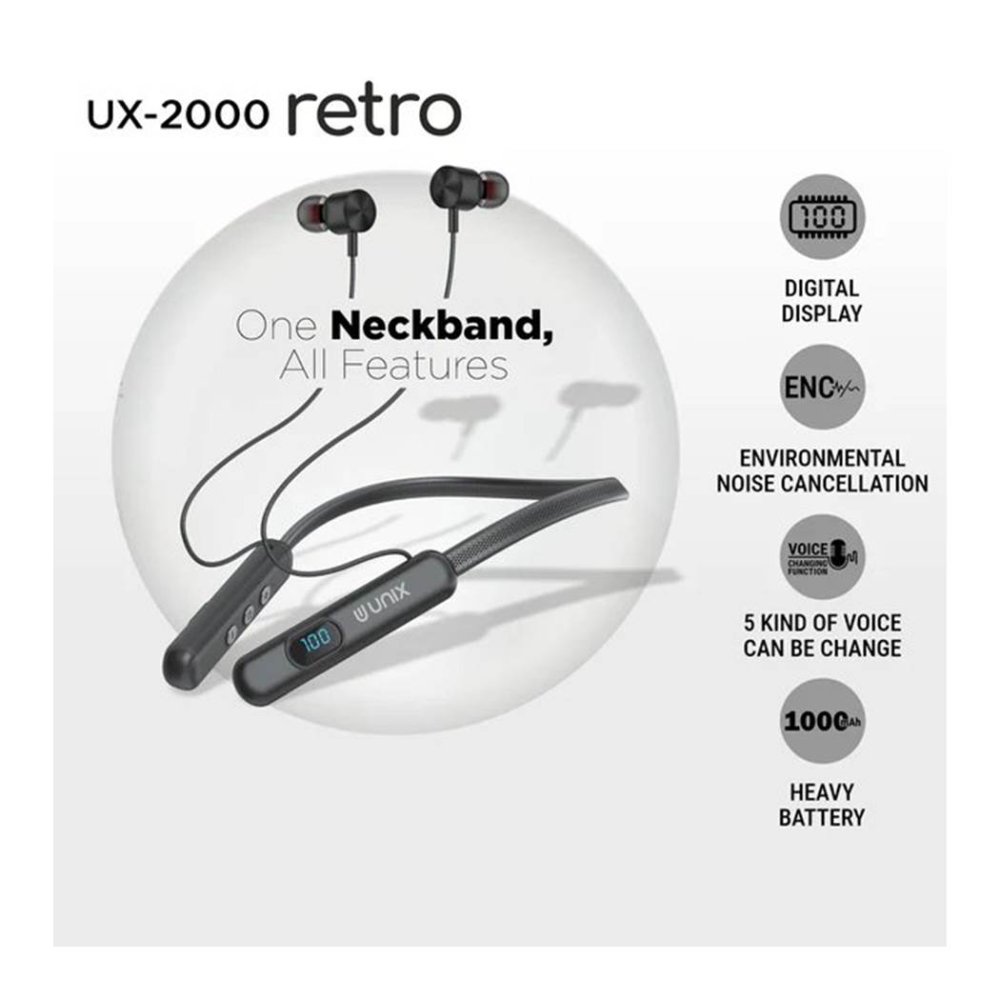
| Other Features | Sweatproof & Ergonomic Fit : Built for all-day comfort during workouts, commutes, or calls. ENC Noise Cancellation Technology : Experience crisp audio and clearer calls, even in noisy environments. Bluetooth V5.3 For Seamless Connectivity : Reliable wireless connection with low latency and wide compatibility. Fast Charging & Magnetic On,Off : Quick charge reduces downtime, while magnetic buds control power automatically. 5 Unique Voice Changing Modes : Have fun on calls with 5 different voice transformations for playful interaction. Stylish Color Options : Available in 4 elegant shades: Black, Blue, Green, and Silver to suit your personal style. Massive 1000mAh Battery With 450H Playtime : Enjoy ultra-long-lasting playback, perfect for travel, work, or extended use. Unix UX-2000 Retro Best Wireless Neckband - Voice Changing with ENC Rediscover the essence of style and innovation with the Unix UX-2000 Retro Best Wireless Neckband. Designed for those who appreciate a blend of classic aesthetics and modern technology, this neckband offers an impressive array of features for an enhanced audio experience. |
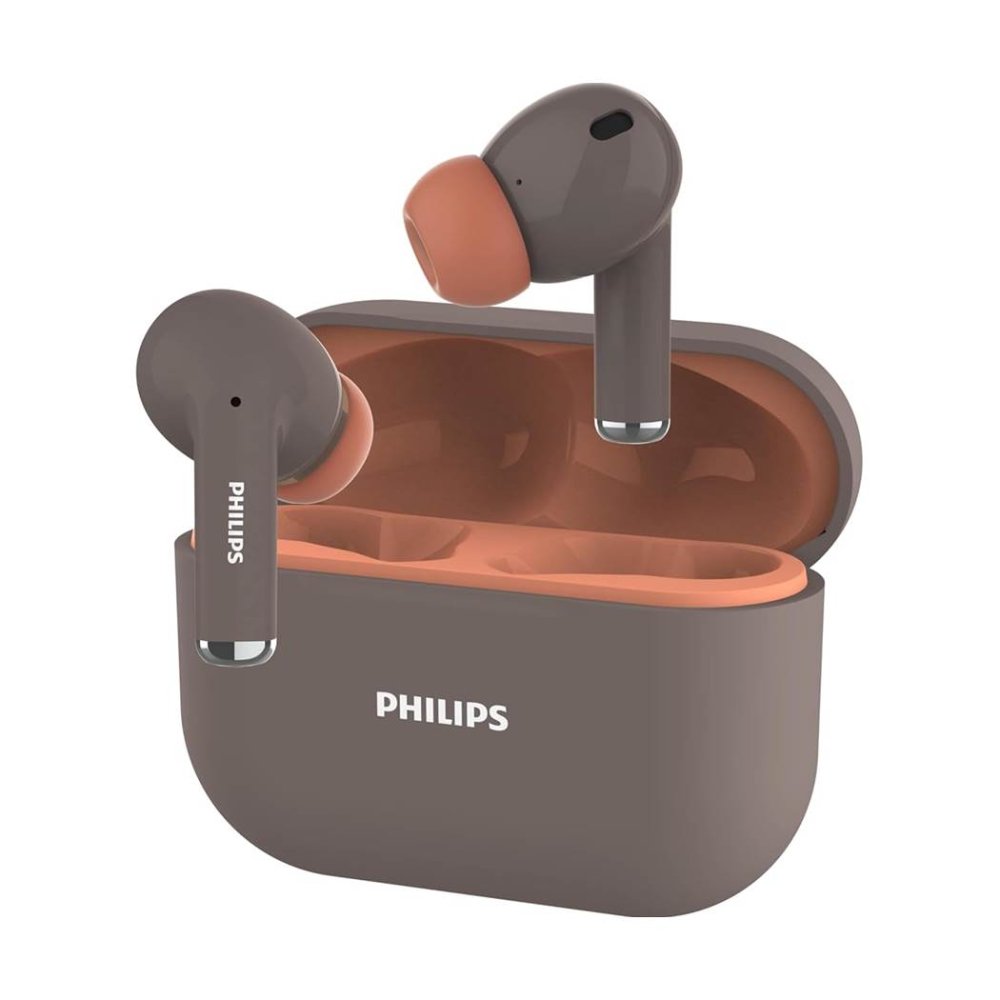
Reliable Connection : Bluetooth connection provides a stable, uninterrupted listening and calling experience. High-Quality Sound : Experience warm, natural sound with dynamic bass boost and 12mm drivers for deep bass and clear calls. Comfort & Controls : Designed for a snug fit with interchangeable silicone ear tips, plus easy on-ear touch controls for convenience. Durable & Splash-Resistant : IPX4 rated, offering protection from sweat and splashes, making them perfect for workouts or outdoor use. Long Playtime & Convenience : Enjoy up to 55 hours of playtime with a pocket-sized charging case, ensuring your earbuds are always ready to go. |
Advertisement
Compare Unix UX-2000 Retro Best with:
Compare Philips TAT1169BN with:
Top Differences
- Battery Life: 7 + 48 Hours vs 450 Hours
- Noise Cancelling: Environmental Noise Cancelling vs Advanced Environmental Noise Cancelling
- Driver Size: 12 mm vs 10 mm
- Weight: 38 GM vs 33 GM
- Impedance: 16 Ohms Vs 40 Ohms
Advertisement