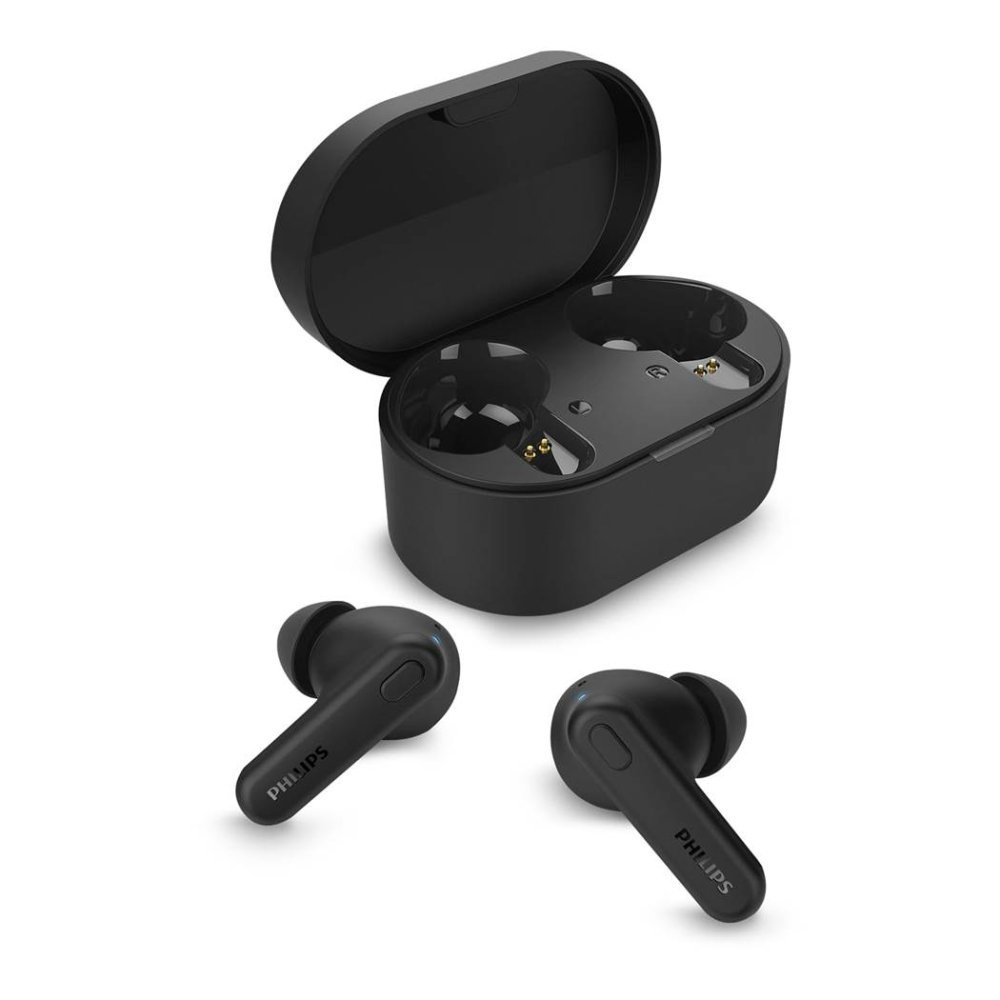
Dynamic 6 mm Drivers Feel the power of sound with 6mm dynamic drivers that deliver powerful and immersive audio.
Secure and comfortable fit. Designed to fit securely into your ear canals, these headphones offer comfort during long hours of use.
15 hours playback. It is 5 hours of playback in the headset and another 10h with the charging case. Many hours of sound to keep up with you all day.
Splash resistant with IPX4 protection. Don't worry about splashing water, a little rain or sweat during workouts. The Philips TAT1108 headset is IPX4 rating, ensuring resistance to these conditions.
AI microphone for clearer calls. With an advanced Artificial Intelligence algorithm, this headset provides clearer calls, filtering out unwanted noise and providing a clearer communication experience.
Clear call quality : Don't let sounds from the world interrupt your listening. These headphones feature an AI microphone that uses an advanced AI algorithm to filter out the noise you don't want to hear and ensure clear call quality. Hear each other clearly every time. |
Warranty Summary : 1 Year warranty given against any manufacturing defects, physical and water damage does not include in warranty.
True Sound Quality : MOVEAUDIO S150 Bluetooth earbuds bring a truly natural, authentic sound and powerful bass performance with a 13mm large speaker driver. You can immerse yourself in the incredible audio clarity without limits.
Comfortable Wearing : The semi-in-ear design brings you the ultimate comfort experience. And its lightweight, ergonomic earbuds minimizes wearing fatigue and can be used for a long time. Put in your ears, let the music play, and relax.
Unbreakable Connection : Enjoy wireless stable freedom with MOVEAUDIO S150 Wireless Earphones. The Bluetooth 5.0 wireless earbuds give you an unbreakable connection for music and hands-free calls. With the use of Bluetooth 5.0, your device and wireless earbuds will be inseparable.
Long-lasting Battery : Listen for longer with MOVEAUDIO S150 true wireless earbuds. It provides up to three and a half hours of listening time on a single charge and up to 20 hours with the charging case for an unlimited audio experience. When you’re in a rush and need power fast, simply charge for 15 minutes and get up to 1 hour of playtime. |
 ALERT
ALERT