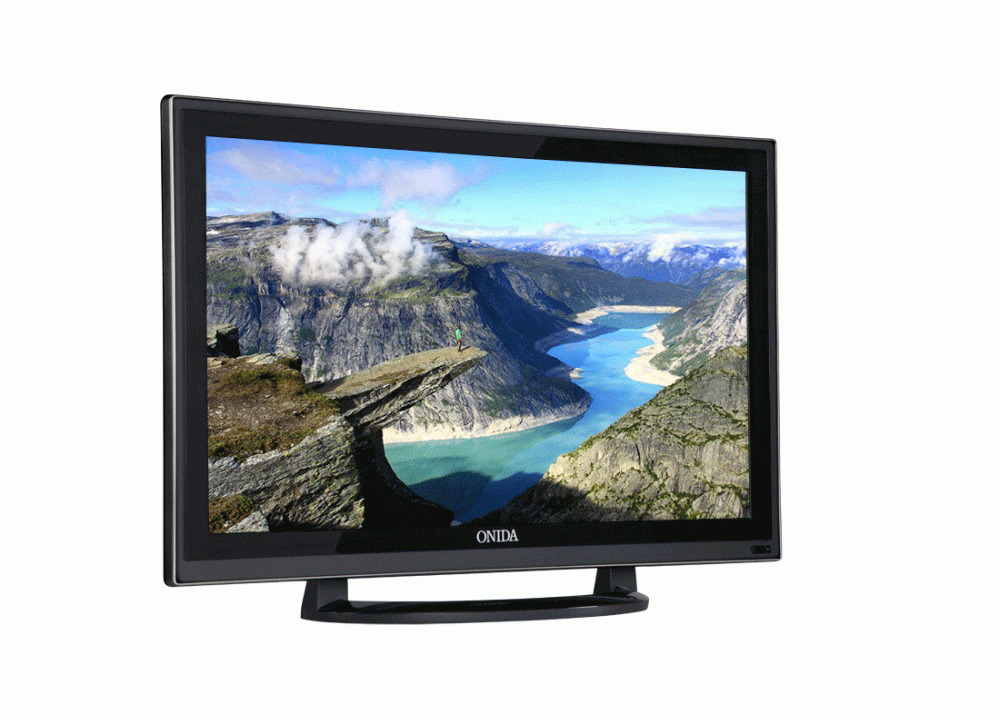
| Model No |
LEO24HRD |
LED24D2100 |
| TV Type |
LED TV |
LED TV |
| Screen Size |
24 Inch (59.80 cm) |
24 Inch (59.80 cm) |
| Resolution |
1366 x 768 |
1920 x 1080 |
| Aspect Ratio |
16:9 |
16:9 |
| Motion Rate |
NA |
NA |
| Viewing Angle |
178 / 178 degrees |
178 / 178 degrees |
| USB |
| USB Version |
: 2.0 |
| Supported Audio Formats |
: MP3, AAC, WMA |
| Supported Video Formats |
: MKV, DivX, MP4, AVI, ASF, MOV, FLV, DAT, VOB |
| Supported Picture Formats |
: JPG |
|
| USB Version |
: 2.0 |
| Supported Audio Formats |
: MP3, AAC, WMA |
| Supported Video Formats |
: MKV, DivX, MP4, AVI, ASF, MOV, FLV, DAT, VOB |
| Supported Picture Formats |
: JPG |
|
| Video |
| Selectable Picture Modes |
: Vivid / Cinema / News / Sports / Normal |
| Video Processing |
: SRV Engine |
| Dynamic contrast ratio |
: 1000000 : 1 |
| Flesh Tone Adjust |
: Off, Low, Medium, High |
| Noise Reduction |
: Off, Low, Medium, High |
| Display Color |
: 16.7 Million |
| Colour System |
: Pal / Secam / Auto |
| Backlight Module |
: EDGE LED |
|
| Panel |
: A+ |
| Dynamic Contrast Ratio |
: 1000000:1 |
| Built in Digital Media Player |
: Yes |
|
| Audio |
| Audio Output |
: 2 x 10 Watts |
| Sound Modes |
: Movie, Music, Flat, Normal |
| Equalizer |
: Yes |
| Surround Sound |
: Yes |
|
| Audio output |
: 5 + 5 Watts |
| Audio Equalizer |
: Yes |
| Automatic Volume Level (AVL) |
: Yes |
|
| Connectivity Options |
| USB |
: 1 |
| HDMI |
: 1 |
| Composite Video In |
: 1 |
| Component Video (Y/Pb/Pr) In |
: 1 |
| VGA |
: 1 |
| AV Out |
: 1 |
| PC Audio In |
: 1 |
|
| USB |
: 2 (Rear) |
| HDMI |
: 2 (Rear) |
| Radio Frequency Input (RF) |
: 1 (Rear) |
| Component / Y Pb (Cb) Pr (Cr) |
: 1 (Rear) |
| Audio L/R For Component Input |
: 1 |
| AV Input |
: 1 |
| VGA Input |
: 1 |
| Audio L/R for VGA input |
: 1 |
| Video RCA output |
: 1 |
| MHL |
: Yes. MHL stands for Mobile High-Definition Link technology, which allows you to display your smartphones content to a TV, all while charging your mobile device. |
|
| Other Features |
| USB Play |
: Movie, Music, Jpeg |
| OSD Languages |
: English / Arabic / Russian |
| Hotel Mode |
: Optional |
| Wake Up Timer |
: Yes |
| Others |
: Alarm |
| Design |
: Glossy Black |
|
| Moisture resistant + Dust resistant components |
: Yes |
| Wide viewing angle |
: Yes |
| Energy Efficient |
: Yes |
| Digital Noise Reduction |
: Yes |
| High Transmittance |
: Yes |
|
| General Details |
| Power Supply |
: 100 240VAC ; 50Hz / 60HZ |
| Power Consumption |
: 50 Watts |
| Weight with Stand |
: 4 Kg |
|
| Power Supply |
: 100 240 Volt,50/60Hz |
| Power Consumption |
: 40 watts |
| Power Consumption (Stand-by) |
: 0.5 Watt |
| Weight with Stand |
: 3.4 Kg |
| Weight without Stand |
: 3.2 Kg |
|
| Supplied Accessories |
| Remote Control |
: Yes |
| Battery Cell |
: Yes |
| Wall Mount |
: Yes |
| Instruction Manual |
: Yes |
| Table Top |
: Yes |
|
| Remote Control |
: Yes |
| Power Cord |
: Yes |
| User Manual |
: Yes |
| Cable Tie/ Clip |
: 1 |
| Battery |
: (Size / Quantity) AAA / 2 |
|
 ALERT
ALERT