 ALERT
ALERT
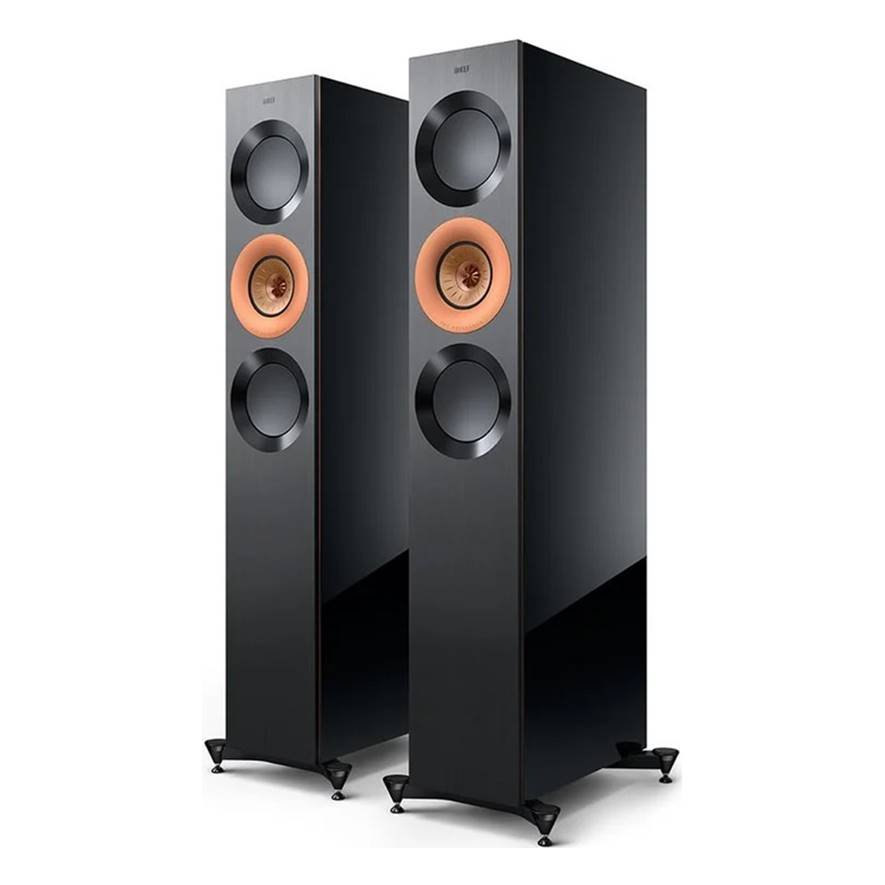
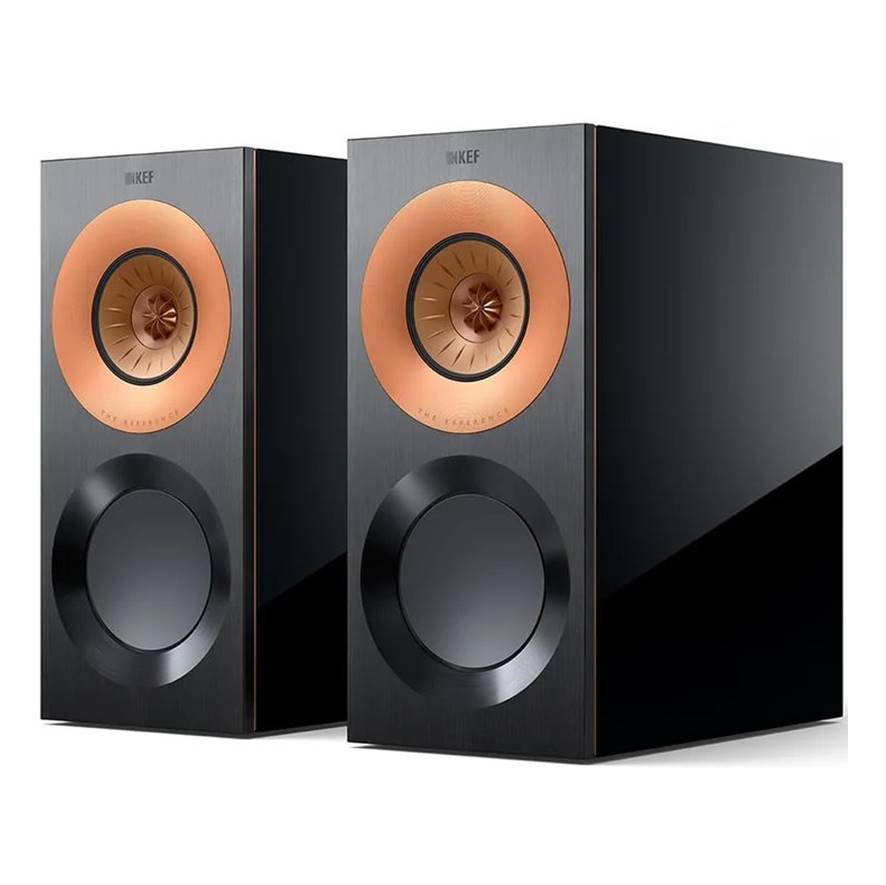
KEF Reference 3 Meta vs KEF Reference 1 Meta
Advertisement
| Specification | ||
|---|---|---|
| Price | 1750000.00 |
1250000.00 |
| Brand | KEF |
KEF |
| Model No | Reference 3 Meta |
Reference 1 Meta |
| Wired / Wireless | Home Theatre Speaker Specification |
Home Theatre Speaker Specification |
| Driver Type | Dynamic |
Dynamic |
| Driver Diameter | Uni-Q Driver Array MF : 125 mm Aluminum Cone HF : 25 mm Aluminum Dome With MAT Bass Unit LF : 2 X 165 mm Aluminum Cone |
Uni-Q Driver Array MF : 125 mm Aluminum Cone HF : 25 mm Aluminum Dome With MAT Bass Unit LF : 165 mm Aluminum Cone |
| Impedance | 4 Ohms ( Min. 3.2 Ohms ) |
4 Ohms ( Min. 3.2 Ohms ) |
| Sensitivity | 86 dB |
85dB |
| Frequency Response | Frequency Response ( ±3dB ) 43 Hz - 35 kHz Crossover Frequency 450Hz, 2.1KHz Typical In-Room Bass Response ( -6dB ) 28Hz Frequency Range Free Field ( -6dB ) Short Port : 38Hz - 45kHz Long Port : 35Hz - 45kHz |
Crossover Frequency : 450 Hz, 2.1 kHz Frequency Response ( ±3dB ) 45Hz – 35KHz Typical In-Room Bass Response ( -6dB ) : 30Hz Frequency Range Free Field ( -6dB ) : Short Port : 40Hz -45KHz, Long Port : 37Hz - 45KHz Harmonic Distortion 2nd & 3rd Harmonics ( 90dB, 1m ) : <0.5% 40Hz – 100KHz, <0.2% 200Hz – 2KHz, <0.1% 2kHz - 20KHz |
| Maximum Power Input | NA |
NA |
| Maximum Power Output | 50 - 300 W ( RMS ) Three-Way Bass Reflex |
50 - 200 W ( RMS ) Three-Way Bass Reflex |
| Signal to Noise Ratio | 113.5 dB |
111dB |
| Noise Cancelling | ||
| Aux Connectivity | No |
No |
| Weight | 51.3 Kg |
18.2 Kg |
| Dimensions | Speaker : 1155 mm X 205 mm X 462 mm With Grille, Terminal & Plinth : 1207 mm X 323 mm X 467 mm |
Speaker : 440 mm X 205 mm X 422 mm |
| Available Colors | Black, White, Blue, Grey, Silver |
Black, White, Blue, Grey, Silver |
| Accessories | KEF Reference 3 Meta Home Theatre Speaker User Manual Warranty Information |
KEF Reference 1 Meta Home Theatre Speaker User Manual Warranty Information |
| Other Features | Elegant design with high-gloss finishes. Uni-Q driver array for astonishing sound accuracy. Sturdy construction for minimal cabinet resonance. Audiophile-grade components for unmatched fidelity. Meta Technology for extended high-frequency response. Dual 7-inch bass drivers for commanding low-end performance. The KEF Reference 3 META employs groundbreaking Meta Technology to extend high-frequency response, delivering a level of audio detail that sets a new standard. With dual 7-inch bass drivers, the Reference 3 META generates commanding and precise low-frequency performance, adding depth and richness to your musical journey. The speaker’s construction is engineered to minimize cabinet resonance, preserving audio purity and ensuring that your music is delivered without unwanted distortions. The Uni-Q driver array positions the tweeter in the acoustic center of the bass/midrange cone, resulting in unparalleled sound accuracy and a soundstage that envelops you. |
Available in 5 finishes. Optimised cabinet design for best acoustic performance. Enhanced crossover design fine-tuned the signal path for maximum clarity. The Reference Series Grille set for each model is available as separate item. With mounting inserts to secure on KEF S-RF1 Floor Stand ( available as separate item ). Bespoke 12th generation Uni-Q with MAT driver array for exceptional acoustic accuracy. Metamaterial Absorption Technology eliminates 99% of high-frequency distortion for pure, natural sound. Five Models : Reference 1 Meta, Reference 3 Meta, Reference 5 Meta, Reference 2 Meta, Reference 4 Meta. |
Advertisement
Compare KEF Reference 3 Meta with:
Compare KEF Reference 1 Meta with:
Top Differences
- Frequency Response: Crossover Frequency : 450 Hz, 2.1 kHz Frequency Response ( ±3dB ) 45Hz – 35KHz Typical In-Room Bass Response ( -6dB ) : 30Hz Frequency Range Free Field ( -6dB ) : Short Port : 40Hz -45KHz, Long Port : 37Hz - 45KHz Harmonic Distortion 2nd & 3rd Harmonics ( 90dB, 1m ) : <0.5% 40Hz – 100KHz, <0.2% 200Hz – 2KHz, <0.1% 2kHz - 20KHz vs Frequency Response ( ±3dB ) 43 Hz - 35 kHz Crossover Frequency 450Hz, 2.1KHz Typical In-Room Bass Response ( -6dB ) 28Hz Frequency Range Free Field ( -6dB ) Short Port : 38Hz - 45kHz Long Port : 35Hz - 45kHz
Advertisement