 ALERT
ALERT
Best For
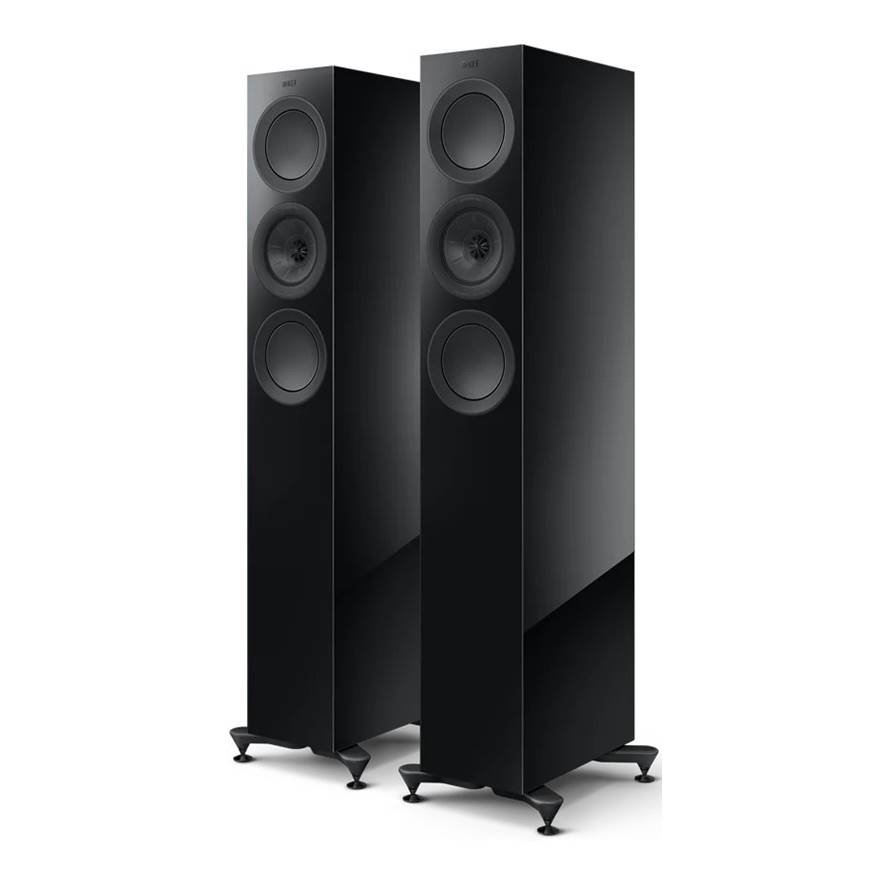
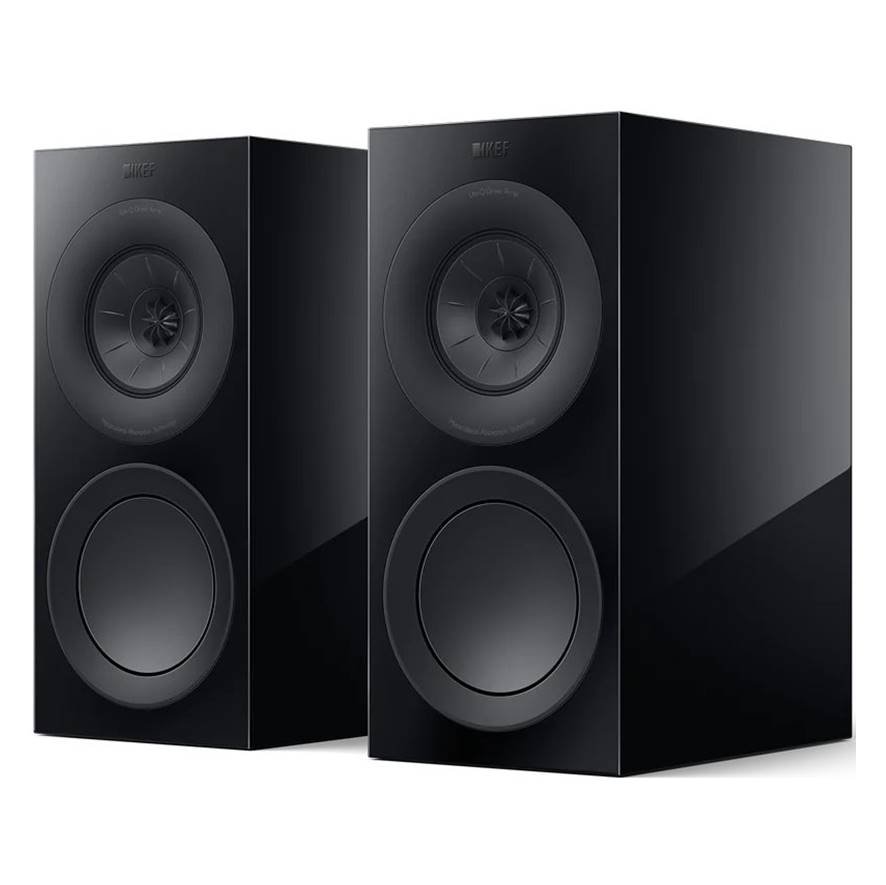
The KEF R3 Meta and KEF R5 Meta are premium three-way speakers built around KEF's 12th-generation Uni-Q driver array with Meta Material Absorption Technology (MAT), delivering exceptional clarity and precise imaging. The main difference lies in their form factor and bass performance. The R3 Meta is a high-end bookshelf speaker with a larger single bass driver, making it ideal for compact listening spaces. The R5 Meta is a slim floorstanding speaker featuring dual bass drivers for greater low-frequency output, higher power handling, and room-filling sound suited to larger spaces.
Verdict
Choose the KEF R3 Meta if you want reference-quality bookshelf speakers for stereo listening or smaller rooms where placement flexibility is important. Opt for the KEF R5 Meta if you have a medium to large room and want deeper bass, greater scale, and a more immersive listening experience without relying heavily on a subwoofer. For most home audio enthusiasts seeking full-range performance, the R5 Meta is the stronger overall choice.
| Specification | ||
|---|---|---|
| Price | 370544.00 |
330000.00 |
| Brand | KEF |
KEF |
| Model No | R5 Meta |
R3 Meta |
| Wired / Wireless | Home Theatre Speaker Specification |
Home Theatre Speaker Specification |
| Driver Type | Dynamic |
Dynamic |
| Driver Diameter | Uni-Q Driver Array MF : 125 mm Aluminum Cone HF : 25 mm Vented Aluminum Dome With MAT Bass Unit LF : 2 X 130 mm Hybrid Aluminum Cone |
Uni-Q Driver Array MF: 125 mm Aluminum Cone HF: 25 mm Vented Aluminum Dome With MAT Bass Unit: LF : 165 mm Hybrid Aluminum Cone |
| Impedance | 4 Ohms ( Min. 3.2 Ohms ) |
4 Ohms ( Min. 3.2 Ohms ) |
| Sensitivity | 87 dB |
87 dB |
| Frequency Response | Crossover Frequency : 400 Hz, 2.7 KHz Frequency Range ( -6dB ) : 38 Hz - 50 KHz Frequency Response ( ±3dB ) : 52 Hz - 28 KHz Typical In-Room Bass Response ( -6dB ) : 29 Hz Harmonic Distortion ( 90dB, 1m ) : <1% 75 Hz A Above, <0.5% 110 Hz - 20 KHz |
Crossover Frequency : 420 Hz, 2.3 KHz Frequency Range ( -6dB ) : 38 Hz - 50 KHz Frequency Response ( ±3dB ) : 58 Hz - 28 KHz Typical In-Room Bass Response ( -6dB ) : 30 Hz Harmonic Distortion ( 90dB, 1m ) : <1% 73 Hz & Above, <0.5% 90 Hz - 20 KHz |
| Maximum Power Input | NA |
NA |
| Maximum Power Output | 15 - 200 W ( RMS ) Three-Way Bass Reflex |
15 - 180 W ( RMS ) Three-Way Bass Reflex |
| Signal to Noise Ratio | 110 dB |
110 dB |
| Noise Cancelling | ||
| Aux Connectivity | No |
No |
| Weight | 24.5 Kg |
12.4 Kg |
| Dimensions | Speaker : 1025 mm X 175 mm X 344 mm Terminal With Plinth : 1072 mm X 272 mm X 344 mm |
Speaker : 422 mm X 200 mm X 336 mm |
| Available Colors | Black, White, Brown |
Black, White, Blue, Brown |
| Accessories | KEF R5 Meta Home Theatre Speaker Port Bungs Microfiber Grille Plinth & Spike Accessories User Manual & Warranty Information |
KEF R3 Meta Home Theatre Speaker Port Bungs Rubber Feet One Pair Of Microfiber Grilles User Manual & Warranty Information |
| Other Features | Meta Material Absortion technology absorbs 99% of unwanted sound for the most pure and natural sound. R5 Meta boasts the 12th generation Uni-Q driver array with MAT and two 5.25†hybrid aluminium bass drivers. The slim and elegant R5 Meta is compact, but it is more than capable of delivering highly detailed sound and deep, clean bass. |
Meta Material Absortion technology absorbs 99% of unwanted sound for the most pure and natural sound. R3 Meta featues KEF's 12th generation Uni-Q driver array with MAT and a powerful 6.5†hybrid aluminium bass driver that pushes performance to new extremes. R3 Meta redefines bookshelf speaker’s performance. Sharing the same drivers as the range-topping R11 Meta, the R3 Meta is a true three-R3 Meta redefines bookshelf speaker’s performance. Sharing the same drivers as the range-topping R11 Meta, the R3 Meta is a true three-way design way design. |
Compare KEF R5 Meta with:
Frequently Asked Questions
Top Differences
- Bluetooth: yes vs no
- Frequency Response: Crossover Frequency : 420 Hz, 2.3 KHz Frequency Range ( -6dB ) : 38 Hz - 50 KHz Frequency Response ( ±3dB ) : 58 Hz - 28 KHz Typical In-Room Bass Response ( -6dB ) : 30 Hz Harmonic Distortion ( 90dB, 1m ) : <1% 73 Hz & Above, <0.5% 90 Hz - 20 KHz vs Crossover Frequency : 400 Hz, 2.7 KHz Frequency Range ( -6dB ) : 38 Hz - 50 KHz Frequency Response ( ±3dB ) : 52 Hz - 28 KHz Typical In-Room Bass Response ( -6dB ) : 29 Hz Harmonic Distortion ( 90dB, 1m ) : <1% 75 Hz A Above, <0.5% 110 Hz - 20 KHz