 ALERT
ALERT
Advertisement
| Specification | ||
|---|---|---|
| Price | 612514.50 |
643576.12 |
| Brand | KEF |
Bowers & Wilkins |
| Model No | R11 Meta |
HTM82 D4 |
| Wired / Wireless | Home Theatre Speaker Specification |
Home Theatre Speaker Specification |
| Driver Type | Dynamic |
Dynamic |
| Driver Diameter | Uni-Q Driver Array MF: 125 mm Aluminum Cone HF: 25 mm Vented Aluminum Dome With MAT Bass Unit: LF : 4 X 165 mm Hybrid Aluminum Cone |
25/460 mm |
| Impedance | 4 Ohms ( Min. 3.2 Ohms ) |
8 ohm |
| Sensitivity | 90 dB |
89dB spl |
| Frequency Response | Crossover Frequency : 330 Hz, 2.5 KHz Frequency Range ( -6dB ) : 30 Hz - 50 KHz Frequency Response ( ±3dB ) : 46 Hz - 28 KHz Typical In-Room Bass Response ( -6dB ) : 26 Hz Harmonic Distortion ( 90dB, 1m ) : <1% 33 Hz & Above, <0.5% 80 Hz - 20 KHz |
33 Hz - 35 kHz, 45 Hz - 28 kHz |
| Maximum Power Input | NA |
AC 100V-240 V / 50 Hz / 60 Hz |
| Maximum Power Output | 15 - 300 W ( RMS ) Three-Way Bass Reflex |
50 W – 200 W ( RMS ) |
| Signal to Noise Ratio | 113 dB |
90 dB |
| Noise Cancelling | NA |
|
| Aux Connectivity | No |
No |
| Weight | 36.5 Kg |
25.15 Kg |
| Dimensions | Speaker : 1249 mm X 200 mm X 384 mm Terminal With Plinth : 1296 mm X 311 mm X 384 mm |
715 mm X 369 mm X 289 mm |
| Available Colors | Black, White, Brown |
Black, White |
| Accessories | KEF R11 Meta Home Theatre Speaker Port Bungs Microfiber Grille Plinth & Spike Accessories User Manual & Warranty Information |
Bowers & Wilkins HTM82 D4 Speaker |
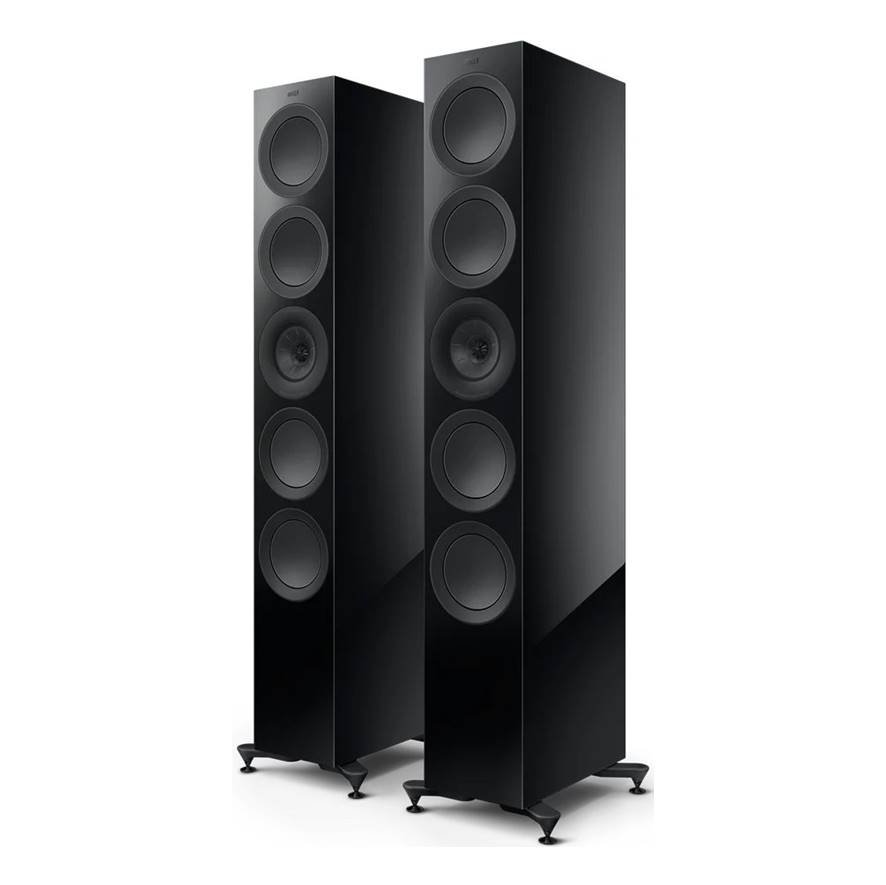
| Other Features | The R11 Meta is the largest floorstanding model of the R Series. Meta Material Absortion technology absorbs 99% of unwanted sound for the most pure and natural sound. For a breathtaking listening experience, the R11's combination of 12th generation Uni-Q driver array with MAT and four 6.5†hybrid aluminum bass drivers allow it to pick out the subtle details of a recording, while also delivering raw power and agility. |
3-Way Vented-Box System. 5-Year warranty Valid from the date of purchase for passive loudspeakers. Technical Features - Diamond Tweeter, Solid Body Tweeter-On-Top, Continuumâ„¢ Cone FST, Matrixâ„¢, Anti-Resonance Plug, Biomimetic Suspension, Aerofoilâ„¢ Cone Bass Units, Flowport. For theater systems based on the more compact 803 D4 or 804 D4, the HTM82 D4 center-channel speaker is the perfect solution. Its more compact midrange drive unit is ideally sized to match those of its siblings. *Stand(s) not included. The new HTM82 D4 may be our most compact center-channel speaker, but it shares the design DNA of its larger siblings, including the Reverse Wrap cabinet and Matrixâ„¢ bracing. The combination of the two technologies ensures a quieter, more acoustically efficient and better-sounding speaker than ever. |

Advertisement
Compare KEF R11 Meta with:
Compare Bowers & Wilkins HTM82 D4 with:
Top Differences
- Sound Output: 50W vs 15W
- Channels: 50 vs 15
- Bluetooth: na vs yes
- Frequency Response: 33 Hz - 35 kHz, 45 Hz - 28 kHz vs Crossover Frequency : 330 Hz, 2.5 KHz Frequency Range ( -6dB ) : 30 Hz - 50 KHz Frequency Response ( ±3dB ) : 46 Hz - 28 KHz Typical In-Room Bass Response ( -6dB ) : 26 Hz Harmonic Distortion ( 90dB, 1m ) : <1% 33 Hz & Above, <0.5% 80 Hz - 20 KHz
- Subwoofer Size: 25 mm vs 125 mm
Advertisement