 ALERT
ALERT
JBL Studio 630 vs Bowers & Wilkins 606 S3
Best For
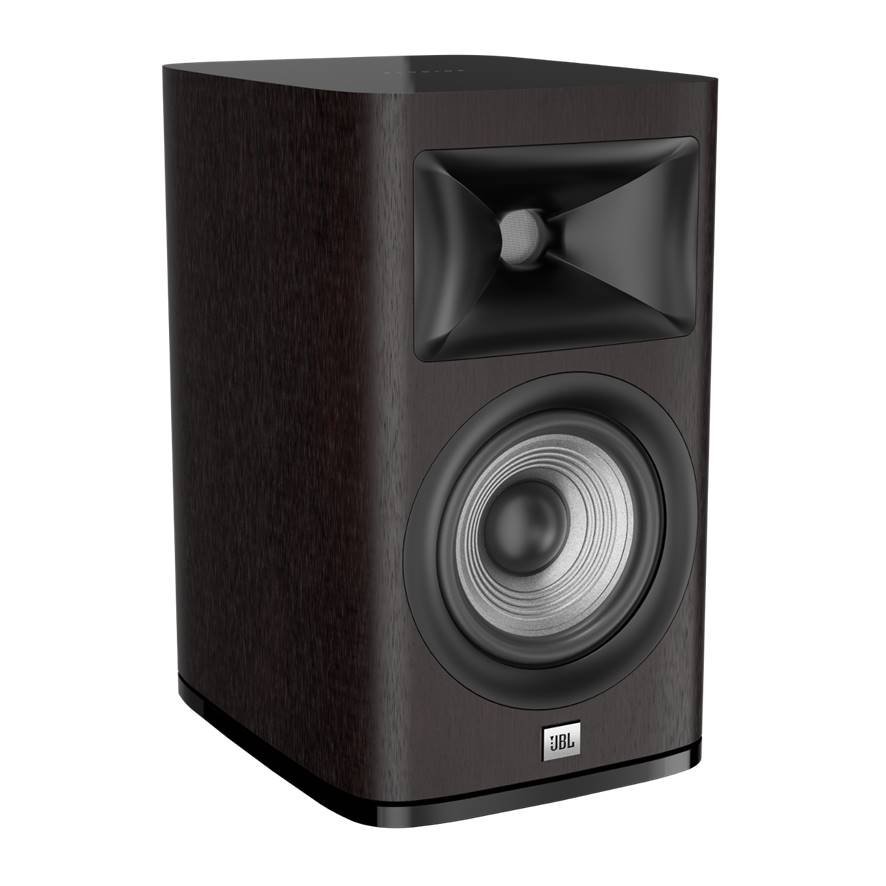
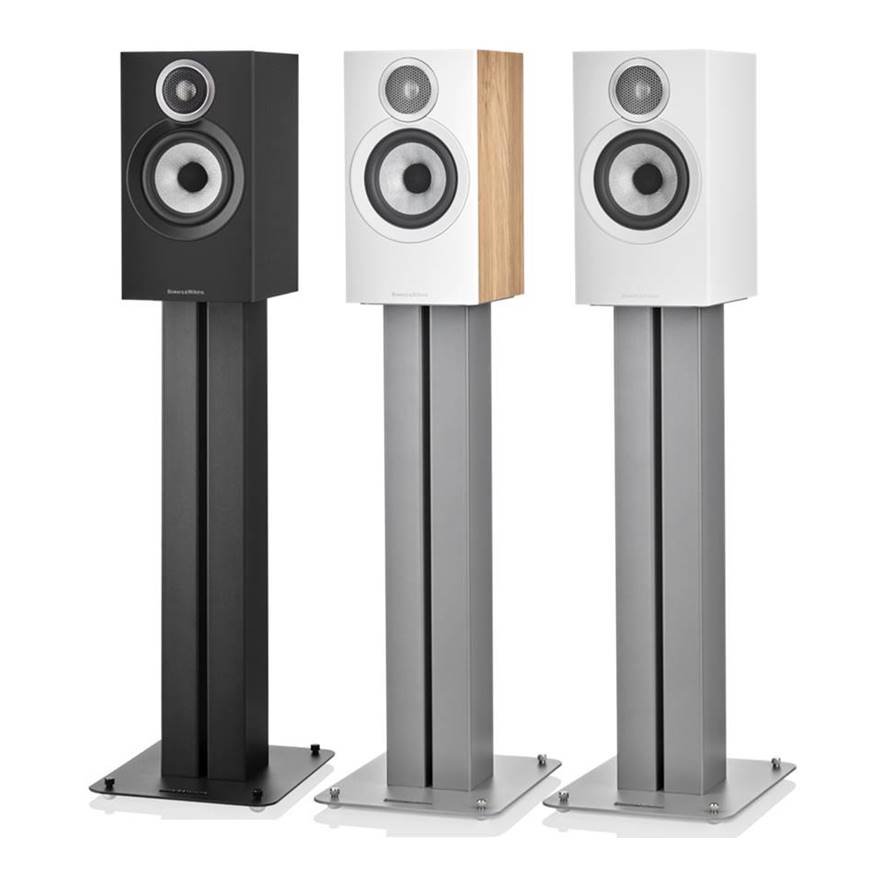
The Bowers & Wilkins 606 S3 and JBL Studio 630 are premium wired bookshelf speakers designed for listeners who value detailed, high-quality sound. The Bowers & Wilkins 606 S3 features a titanium dome tweeter and Continuum cone for precise, transparent audio, while the JBL Studio 630 combines a compression driver with a high-definition imaging waveguide for a spacious, concert-like listening experience. The JBL offers a higher rated RMS power output of 150W and a wider listed frequency response extending to 40kHz. The B&W stands out with its 8-ohm impedance and five-year passive loudspeaker warranty, making both models compelling choices for different home audio setups.
Verdict
The Bowers & Wilkins 606 S3 is the better choice for listeners prioritizing refined sound reproduction, precision, and transparency, with its dedicated Continuum cone and titanium dome tweeter. The JBL Studio 630 is worth considering for home theater enthusiasts who want a dynamic, concert-inspired presentation, higher rated power handling, and extended high-frequency response. Both require a compatible external amplifier and are wired speakers, so neither offers standalone Bluetooth playback. Choose the B&W for a detail-focused stereo setup or the JBL for an energetic home audio experience.
| Specification | ||
|---|---|---|
| Price | 99990.00 |
94289.73 |
| Brand | JBL |
Bowers & Wilkins |
| Model No | Studio 630 |
606 S3 |
| Wired / Wireless | Home Theatre Speaker Specification |
Home Theatre Speaker Specification |
| Driver Type | Dynamic |
Dynamic |
| Driver Diameter | 165 mm PolyPlas Low-Frequency Woofer 25 mm High Frequency Compression Driver With High Definition Imaging Waveguide |
25/165 mm |
| Impedance | 6 Ohms |
8 ohm |
| Sensitivity | 85dB @ 1M, 2.83V |
88dB spl |
| Frequency Response | Crossover Frequencies : 1.9KHz Frequency Response : 45Hz - 40KHz |
40 Hz - 33 kHz, 52 Hz - 28 kHz |
| Maximum Power Input | NA |
AC 100V-240 V / 50 Hz / 60 Hz |
| Maximum Power Output | 150 W ( RMS ) |
30 W - 120 W ( RMS ) |
| Signal to Noise Ratio | NA |
90 dB |
| Noise Cancelling | NA |
|
| Aux Connectivity | No |
No |
| Weight | 9.02 Kg |
7.05 Kg |
| Dimensions | 230 mm X 280 mm X 372 mm |
344 mm X 300 mm X 189 mm |
| Available Colors | Black, Brown |
Black, White, Brown |
| Accessories | JBL Studio 630 Bookshelf Loudspeaker 8 X Feet Pads 1 X Warranty Card 1 X Owner’s Manual |
Bowers & Wilkins 606 S3 Speaker |
| Other Features | Bass-Reflex via Rear-Firing Tuned Port. New, Appealing Form Factor : Our speaker system is pleasing to the eyes, making it a perfect match for your home décor. High-Quality Sounding Compression Drivers : Compression drivers that add best-in-class clarity and detail to your sound experience. High-Definition Imaging Waveguide With High-Frequency Compression Driver : High-quality home audio helps deliver a live-concert sound directly to your home. Top-Graded PolyPlas Cones : For those who prefer their home stereo and home theater to sound precisely like it would sound at a live concert or movie theater. |
Truly amazing sound. 2-Way Vented-Box System. Precision and transparency. Upgraded speaker terminals. 5-Year warranty Valid from the date of purchase for passive loudspeakers. Technical Features - Decoupled Double Dome Titanium Tweeter, Continuumâ„¢ Cone Bass / Midrange, Flowportâ„¢. The 606 S3 stand-mount speaker provides the ideal combination of size and performance. It combines our all-new Titanium Domeâ„¢ tweeter with the powerful accuracy and transparency of our acclaimed Continuumâ„¢ bass/midrange cone. *Stand(s) not included. The new 606 S3 takes the award-winning 606 formula and evolves it. By complementing the Continuum cone and Titanium Dome tweeter with upgraded speaker terminals, and a subtly modernized design, 606 is now even more appealing to even more music lovers. |
Compare JBL Studio 630 with:
Compare Bowers & Wilkins 606 S3 with:
Frequently Asked Questions
Top Differences
- Sound Output: 30W vs 150W
- Channels: 30 vs 150
- Frequency Response: 40 Hz - 33 kHz, 52 Hz - 28 kHz vs Crossover Frequencies : 1.9KHz Frequency Response : 45Hz - 40KHz
- Subwoofer Size: 25 mm vs 165 mm