 ALERT
ALERT
JBL Live Beam 3 vs Skullcandy Crusher Evo Sensory Bass
Advertisement
| Specification | ||
|---|---|---|
| Price | Rs.24,999.00 |
Rs.24,999.00 |
| Brand | JBL |
Skullcandy |
| Model No | Live Beam 3 |
Crusher Evo Sensory Bass |
| Wired / Wireless | Wireless Headphone Specification |
Wireless Headphone Specification |
| Headphone Type | In Ear |
Over Ear |
| Magnet Type | Dynamic |
Dynamic |
| Driver Diameter | 10 mm |
40 mm |
| Impedance | 16 Ohms |
32 Ohm±15% |
| Sensitivity | 98 dB SPL@1 kHz |
95~100dB |
| Frequency Response | 20 Hz - 40KHz |
20 Hz - 20000 Hz |
| Maximum Power Input | 5V 1A |
NA |
| Wireless / Bluetooth Details | ||
| Wireless Technology | Bluetooth |
Bluetooth |
| Bluetooth Version | 5.3 |
5.0 |
| Compatible Profiles | All Bluetooth Devices |
All Bluetooth Devices |
| Supported Codecs | AAC, SBC |
HSP, HFP, AVRCP, A2DP |
| Battery Type | Lithium-Ion Batteries |
Lithium Polymer Batteries |
| Bluetooth Range | 10 Meters |
10 Meters |
| Battery Life | 12 Hours |
40 Hours |
| Charging Time | 2 Hours |
2 Hours |
| Noise Cancelling | True Adaptive Noise Cancelling |
Active |
| Available Colors | Black, Blue, Purple, Silver |
Black, Grey |
| Connector Plating | NA |
3.5 mm |
| Cable | USB Type-C Charging Cable |
Type-C USB Charging Cable |
| Weight | 72 GM |
312 gm |
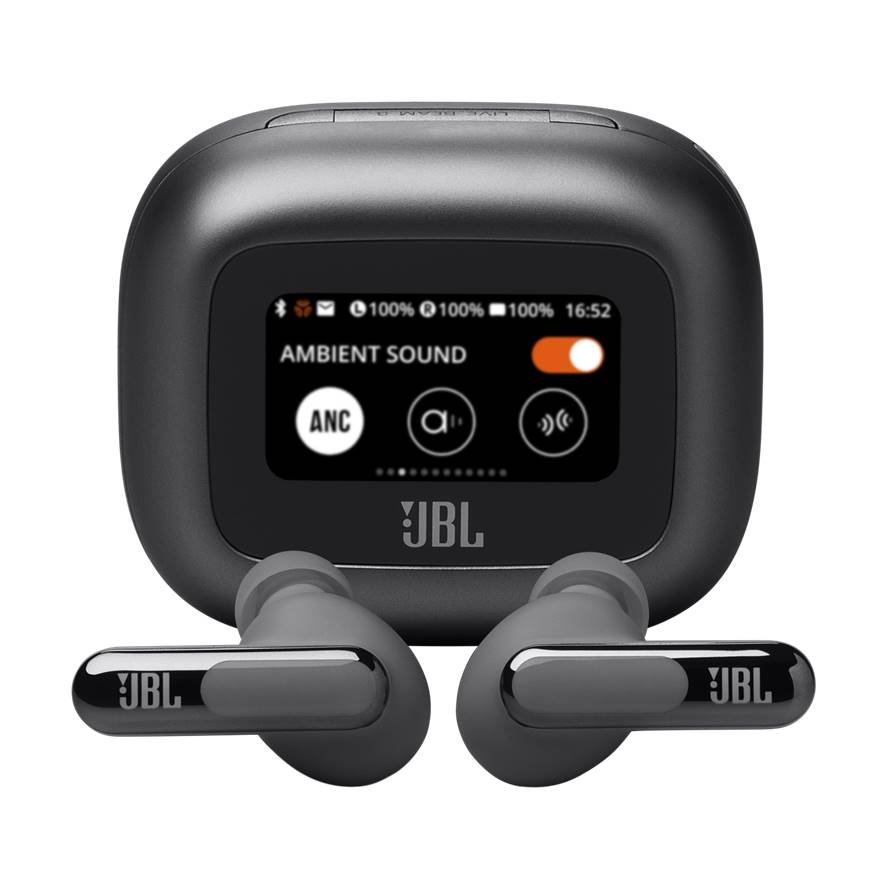
| Other Features | IP55 Water and dust resistant. True Adaptive Noise Cancelling With Custom Control : Tune out the outside world entirely or customize just how much ambient sound you decide to let in. 48 Hours Total Playback : Enjoy 12 hours of playtime, plus another 36 in the charging case. Get 4 hours of playtime with type-C charging cable in 10 Minutes Multi-point connection Switch effortlessly from one Bluetooth device to another, so if you are watching a video on your tablet, you won’t miss a call on your mobile. Personi-Fi - 3.0 : Shape your audio to match your personal listening profile with interactive customization tools that use precise information about you and your preferences to provide the exact sound curve that suits you best. 6 Customized Mics For Perfect Calls : Six beamforming microphones reduce wind and noise interference, so your words always come through loud and clear. A voice equalizer and voice level optimizer give you full control not only over how you sound to others Convenient Smart Charging Case For App-Free Control : You can customize every aspect of your JBL Live Beam 3 earbuds with the 1.45-inch touchscreen display on your Smart Charging Case. The display gives you full control of your sound on any devices - laptop, TV, smartphones, or tablets. Hi-Res Audio Wireless With Spatial Sound : The JBL Live Beam 3’s 10mm dynamic drivers are powered by JBL Signature Sound. Each driver is perfectly tuned to deliver deep bass, balanced mid-range, and refined high frequencies—all at any volume level. JBL Spatial Sound makes you feel like you’re at a concert as the sound comes from virtually everywhere around you. |
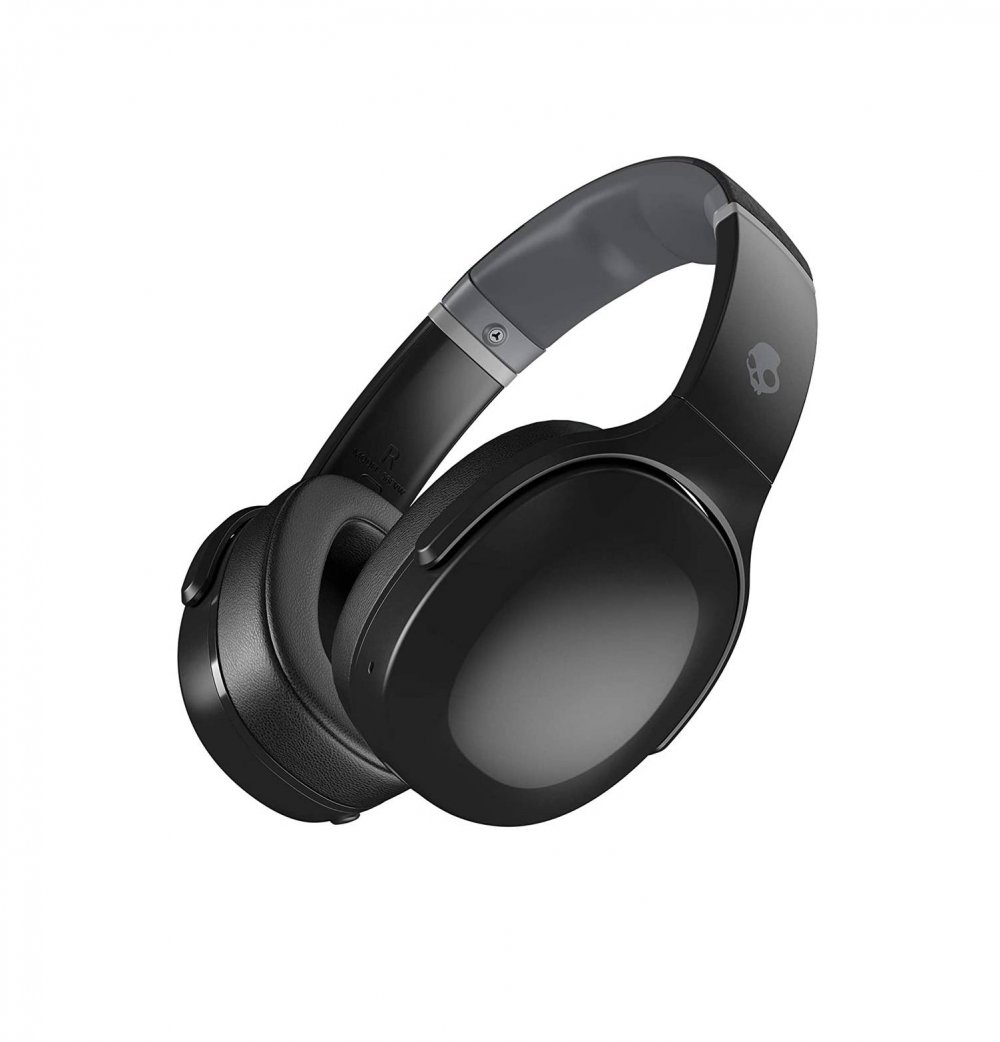
Flat-Folding and Collapsible. Call, Track and Volume Control. Built-in Tile™ Finding Technology. Crusher Adjustable Sensory Bass. 40 Hours of Battery + Rapid Charge. Personal Sound with Skullcandy App. If you ever misplace your headphones, you can easily “ring†them from the Tile App. So what might have seemed lost, is now quickly found. |
Advertisement
Compare JBL Live Beam 3 with:
Compare Skullcandy Crusher Evo Sensory Bass with:
Top Differences
- Battery Life: 40 Hours vs 12 Hours
- Noise Cancelling: Active vs True Adaptive Noise Cancelling
- Driver Size: 40 mm vs 10 mm
- Bluetooth: 5.0 vs 5.3
- Weight: 312 gm vs 72 GM
Advertisement